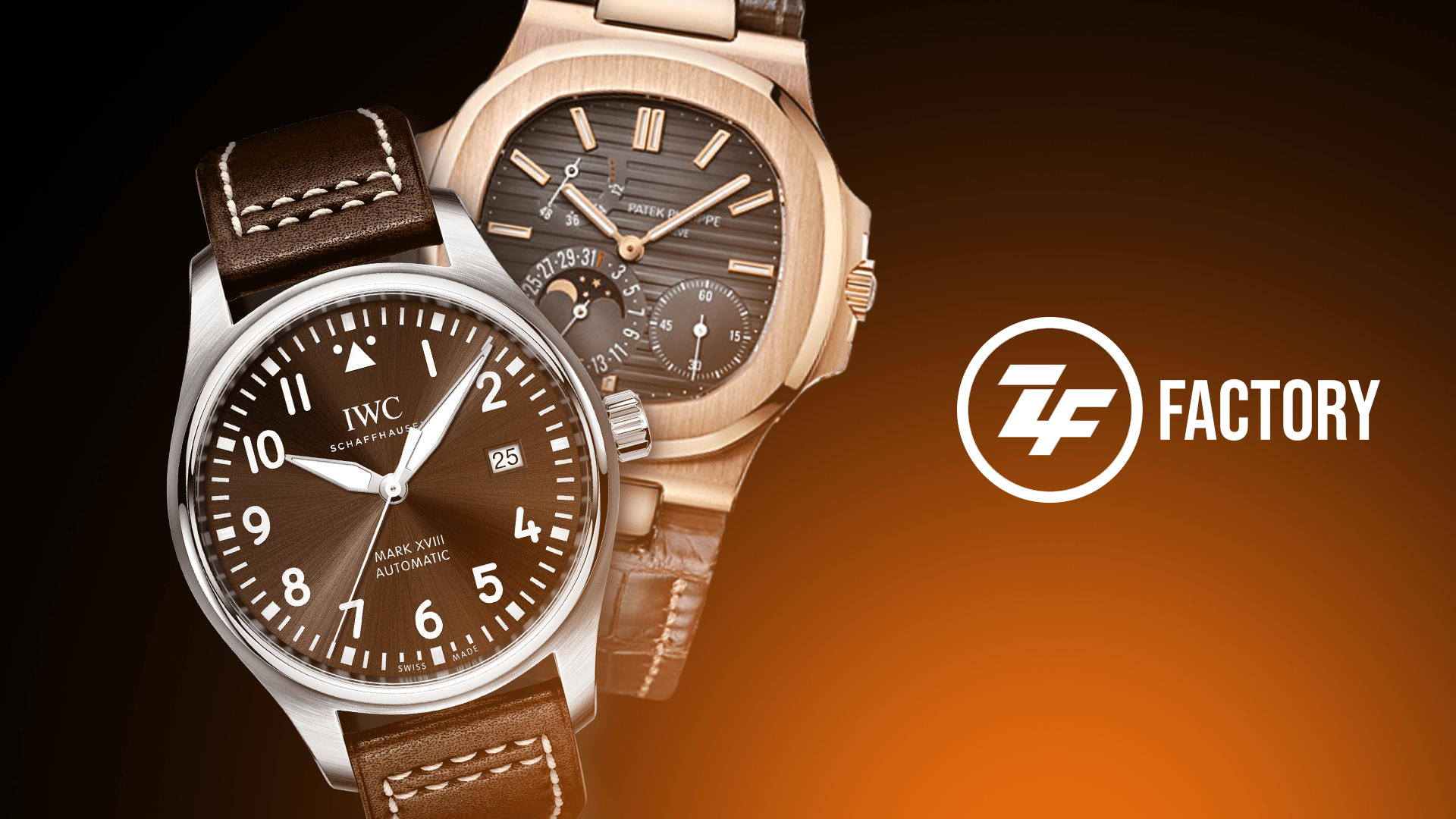
ZF Factory Watches
There is nothing better than a Patek Replica
ZF Factory (often shortened to ZF) is a name you’ll frequently hear in online watch communities when people discuss high-end replica or “super clone” watches. ZF is not a luxury brand itself, and it isn’t affiliated with the Swiss brands it imitates. Instead, ZF is best understood as a label associated with a network of manufacturing and assembly operations that produce watches designed to closely resemble popular luxury models—particularly in case shape, dial details, and overall finishing.
This article explains what “ZF Factory watches” generally refers to, what models ZF is known for, and what enthusiasts mean when they describe ZF as a top-tier option within the replica-watch landscape—purely as information.
What “ZF Factory” Means in Watch Communities
In replica-watch discussions, the word “factory” is used more like a brand identity than a traditional public manufacturer. The “ZF” name functions as a shorthand for a certain standard of build and finishing, the same way enthusiasts might refer to “Clean,” “VSF,” or “ARF” as categories of output and quality.
Because this industry isn’t transparent in the way mainstream manufacturing is, the ZF label also reflects a broader ecosystem: sourcing components, assembling batches, refining versions, and distributing to sellers who serve collectors. What matters to enthusiasts is the end product—how closely it resembles a target model and how consistent the execution is.
Why ZF Became So Well-Known
ZF’s reputation grew because it repeatedly delivered replicas that collectors felt were convincingly close to the look and feel of genuine luxury watches. Within the replica space, “best” usually means a combination of:
Accurate case proportions
High-quality finishing and surface treatment
Dial printing and texture fidelity
Well-chosen movements (for reliability, thickness, and correct hand behavior)
Strong overall “wrist presence” (how authentic it looks on the wrist)
ZF became widely recognized for taking on models that demand careful cosmetic execution—watches where small details like bezel finishing, dial texture, date window placement, and hand shape matter a lot.
Signature Models and Brand Categories ZF Is Known For
ZF has produced replicas across many luxury houses, but it has been especially associated (in enthusiast chatter) with a few key categories:
IWC-style designs
ZF earned strong recognition for IWC-inspired replicas, particularly pieces with clean dials and dress-sport proportions. These models often highlight ZF’s strengths in case finishing and dial layout clarity.
Tudor-style divers
Many replica hobbyists point to ZF as a go-to label for Tudor-inspired divers. These watches rely heavily on dial printing, bezel alignment, case brushing, and the overall balance of vintage and modern styling—areas where ZF is often praised.
Integrated-bracelet sports watches
This category includes the kind of watches where the bracelet finishing and case geometry are everything. Enthusiasts tend to judge these pieces by:
how the bracelet articulates,
how the brushing transitions into polished bevels,
how slim the case feels, and
how well the watch captures the light.
ZF is frequently discussed in connection with this style because the factory label is associated with careful external finishing and strong visual accuracy.
Complication-forward dress pieces
Some ZF-labeled releases are known for attempting visually complex layouts—power reserves, moonphases, or multi-register dials—where “getting the look right” is the main focus.
Materials and Case Construction
When watch collectors talk about quality, they’re often describing the physical confidence of the watch: weight, solidity, tolerances, and how well parts meet.
ZF-labeled watches are commonly described as using:
Stainless-steel cases with clean brushing and polished accents
Sapphire crystals (often with anti-reflective coating, depending on model style)
Ceramic bezels where the genuine model uses ceramic
Solid-link bracelets with machined clasps on sports models
Across many models, ZF’s “feel” is part of why enthusiasts rank it highly: crisp clicks on bezels (for divers), smooth crown action, firm bracelet screws, and consistent case lines that match the silhouette people expect from the genuine reference.
Dial, Bezel, and Crystal Details: The “Make or Break” Zone
If the case is the skeleton, the dial is the face—and this is where collectors often decide whether a replica looks convincing.
ZF watches are frequently discussed for strengths in:
Dial printing clarity (sharp text, balanced spacing, clean edges)
Dial textures (sunburst effects, patterned surfaces, matte finishes)
Applied indices (shape, polish, and placement consistency)
Hand sets (correct length and proportion for the target model)
Date window presentation (alignment and visual integration)
Bezels are another big focus, especially for dive watches and sport models. Enthusiasts often pay attention to:
insert color tone,
marker fill appearance,
engraving depth,
edge finishing, and
the interaction between the bezel and case.
Even when two replicas look similar in photos, small improvements in these areas can dramatically change how authentic the watch appears in real life.
Movements and Functional Design Choices
In replica watches, the movement decision is often a balancing act between:
reliability,
case thickness,
hand stack and date behavior, and
visual resemblance (especially if the caseback is transparent).
ZF-labeled watches commonly use well-known automatic movement bases that are either:
decorated to resemble the genuine movement, or
structured to match layout expectations (rotor look, bridge style, etc.), depending on the model category.
Enthusiasts usually evaluate movement choices by practical criteria:
Does it keep time consistently?
Does it fit the case without forcing the watch to be too thick?
Does the crown feel smooth when setting time/date?
Do complications (if present) behave in a stable, predictable way?
For many collectors, a movement is “good” when it supports the watch’s overall realism and day-to-day usability without drawing attention to itself.
How Enthusiasts Evaluate ZF Watches
Within replica communities, people tend to evaluate watches using a shared vocabulary and a mix of photo comparisons and hands-on impressions. When ZF is described as “the best,” it usually means:
the external finishing is highly refined for the category,
the dial looks correct at normal viewing distance, and
the overall proportions match the genuine reference convincingly.
Collectors often focus on:
case silhouette (especially lugs and crown guards),
bracelet finishing and taper,
bezel alignment and click feel,
dial color under different lighting, and
how the watch “reads” on wrist from a few feet away.
ZF’s reputation is also tied to the way models are released in versions. In the replica world, a “V2” or “V3” label often indicates iterative refinement—small accuracy improvements that enthusiasts track closely.
FAQ: ZF Factory Watches
Are ZF Factory watches the same as genuine luxury watches?
No. ZF-labeled watches are replicas designed to resemble luxury models, but they are not produced or authorized by the original brands.
What does “super clone” mean?
“Super clone” is a community term used to describe replicas that aim for a high degree of visual and physical similarity—especially in case shape, dial details, and overall finishing.
What kinds of watches is ZF most associated with?
In enthusiast discussions, ZF is often associated with well-finished sport and dress-sport replicas, including popular diver styles and integrated-bracelet designs, along with certain classic dress models.
Do ZF watches use sapphire crystal and ceramic bezels?
Often, yes—especially when the genuine model uses those materials. The exact specification depends on the model and version.
How do people compare ZF to other replica factories?
Collectors typically compare factories by model. One factory might be preferred for a particular diver, while another leads for a different brand’s integrated-bracelet watch. ZF is often mentioned as a top-tier option in finishing-focused categories.
Why do people talk about “versions” (V1, V2, V3)?
Replica factories frequently release revised batches that refine small details—dial printing, bezel tone, case shape tweaks, or bracelet finishing. Enthusiasts track these changes closely.
Is ZF a single factory location?
The term “ZF Factory” is used like a label in the replica market. The structure behind it is not publicly documented in the way mainstream watch brands are.